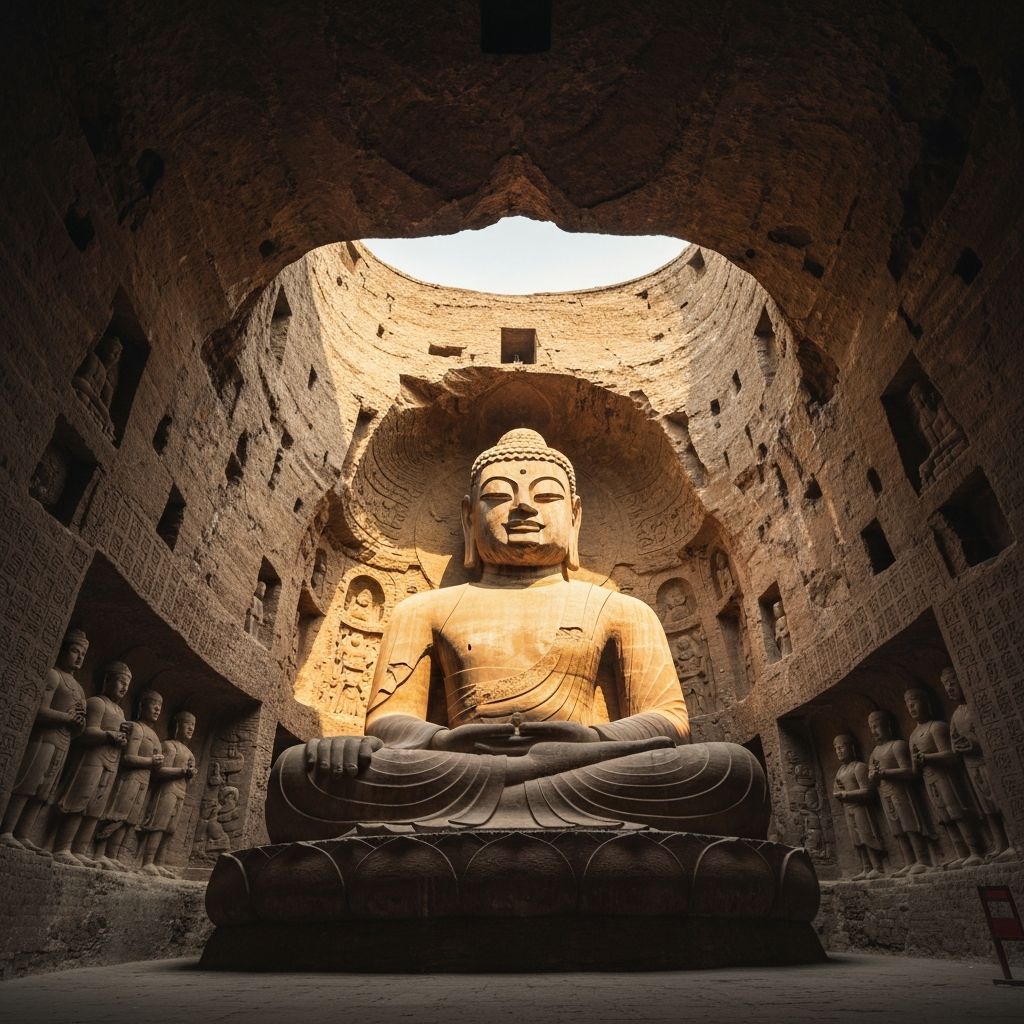
Datong in winter: how cold it gets, how much walking the grottoes and the Hanging Temple involve, which shoes survive the boardwalk, and how to pack when you are coming from Thailand or Singapore.
The short answer
Datong sits at roughly 1,000 m on the northern loess plateau. Winter here is not Beijing cold with a bit more wind; it is a real continental winter. Daytime highs sit around or just below freezing from December to February, and nights commonly fall to −10 to −15°C. Colder spells go further down, and the wind makes all of it feel worse.
What you need is simpler than it sounds: one warm outer layer, three thin layers underneath, gloves, a hat, something for your neck, and shoes with a real rubber sole. You do not need a full expedition wardrobe, and you do not need to buy a heavy down jacket before you leave home if you are already flying into a Chinese city.
What the cold actually feels like
The temperature range matters less than where you are standing. On the open plateau and on the Yungang viewing platforms you are exposed to wind with no shelter at all. Inside the caves and temples it is still cold, and in the unlit caves it feels colder than the outside air because the rock stays cold all day.
Buildings are heated, and heated hard. Shops, restaurants, museums, taxis and hotel lobbies usually sit around 20°C. The practical result is that you will be dressing and undressing all day, so the layers you can take off matter more than the single warmest jacket you own. A long-sleeved base layer, a fleece or wool mid layer, and a windproof outer shell will take you through most of a Datong winter day.
The dry air and the wind are what catch people out. Lip balm, moisturiser and sunglasses are worth more than an extra sweater. Snow is possible from November onwards; when it falls, the Yungang carvings under fresh snow are the reason people come in this season.
How much walking you are signing up for
This is the part nobody tells you, and it is the part that decides whether your feet survive the trip.
Yungang Grottoes: most visitors spend three to four hours here. The site is spread along a cliff line, so you walk between cave groups, climb short flights of stone steps to reach the numbered caves, and stand on hard surfaces for long stretches. It is not a mountain hike, but it is several kilometres on stone and concrete at sub-zero temperatures, and the ground is not soft.
Hanging Temple: about 60 km southeast of the city in Hunyuan county, so a large part of the day is the drive. The temple itself is a short visit, but if you have a climbing ticket the boardwalk is steep, narrow and single file. Slippers, sandals and smooth-soled fashion trainers are the wrong answer here; on a cold day the wooden walkway can be slick.
The old city: the wall, Huayan Temple and the Nine Dragon Screen are walkable from each other, and the wall involves stairs. This is the easiest part of the trip to cut short if your feet are complaining.
Shoes: what works, what fails
Bring shoes with a deep rubber tread and a stiff enough sole to keep stones from pressing through. Trail runners, walking shoes and waterproof hiking shoes all work. Insulated boots are nice in January but not required, and they are miserable to wear on the drive and in heated restaurants.
Leave at home: sandals, slippers, smooth leather soles, canvas shoes with thin soles, and anything you have not walked 10 km in before. A visitor who wore sandals on the Hanging Temple boardwalk reported slipping on it, which is exactly the failure mode to avoid.
Two practical additions are worth the luggage space: a spare pair of insoles, and a pair of thin thermal socks you can swap at midday. Cold feet come from damp socks more often than from thin soles.
If you have a foot problem
Plantar fasciitis, a healing ankle or a bad knee does not rule Datong out, but it changes the shape of the trip. The pattern that works is one heavy walking day, then one light day, rather than three days of grottoes and temples.
On a heavy day, do the Yungang Grottoes in the morning when you are freshest, take the electric shuttle inside the site if it is running, and sit down every hour. On a light day, keep to the old city where you can stop for tea or noodles every few hundred metres, and take taxis between the wall, Huayan Temple and the Nine Dragon Screen instead of stringing them into one walk.
For the Hanging Temple, decide in advance whether you are climbing. The entry ticket lets you see the temple from below without the steep boardwalk, and plenty of visitors decide that view is enough, especially on ice. If you do climb, go slowly, keep one hand free for the rail, and do not carry a heavy daypack.
Coming from Thailand, Singapore or southern China
You are the traveller this page is really for: 30°C one week, −5°C the next, and no wish to drag a winter wardrobe through three countries.
The workable answer is to buy the outer layer in China. Uniqlo, Decathlon and local department stores are everywhere in Beijing and in Datong itself, and a down jacket or a windproof shell bought there costs less than the airline fee for a second bag. Base layers and socks are worth bringing from home because they pack flat. Gloves, a hat and a scarf are cheap to buy on arrival and easy to leave behind.
Two small things that punch above their weight: disposable heat packs, sold in any convenience store, which buy you an extra hour outdoors; and a light windproof layer that you can wear over everything on the plateau and take off indoors.
A winter plan that fits the light
Sunset in December comes before 17:00, so the day is shorter than the itinerary pages assume.
Day one: Yungang Grottoes in the morning, when the light hits the cliff and the tour buses have not arrived. Back in the city by mid-afternoon; old city wall, Huayan Temple and dinner on the same block. Day two: Hanging Temple with the morning departure, which also gives you the best chance with the daily climbing-ticket allocation, then back to Datong in the late afternoon.
If you are here on a day when snow has closed the boardwalk or the climbing tickets are gone, do not force it. The grottoes are at their best in this season and the old city is quiet.
What to check before you go
The Hanging Temple climbing ticket is capped at 2,475 a day. Reservations open only for dates within the next seven days, split between online and the ticket office, and the reservation channel has changed more than once in the last two years. Confirm the current channel yourself before you build a day around it.
City buses mostly stop running around 19:00, so plan the return from the grottoes before dark. Off-season tickets are cheaper at both sites, which is one small consolation for the cold.
Official sources
Last updated 2026-10. Schedules and prices change — verify current details before you travel.
Plan the booking
Book your Datong trip
Hanging Temple climbing tickets are capped at 2,475 a day and reservations open only seven days ahead. Check the official channel and current rules before booking; partner tour links do not replace the temple ticket.
Day tours & tickets
Guided day trips that pair the Hanging Temple with Mount Heng — the day that is hardest to do without a car.
Hotels in Datong
Live rates for the old city and the area around the grottoes. Peak-season rooms go first.
Travel insurance
Cover for medical costs, cancellations and delays. Cheap next to the price of an evacuation.
Affiliate disclosure: bookings made through these links may earn us a commission. You pay the same price.
More Datong guides
How to Get to Datong
High-speed rail from Beijing in under two hours
Best Time to Visit Datong
Shoulder season beats summer for comfort and crowds
A 3-Day Datong Itinerary
Caves, a cliff temple and a Ming city in three days
What a Trip to Datong Costs
The numbers, before you book
Can You Visit Datong Visa-Free? China’s 240-Hour Transit Policy
Datong is in the permitted area — but your route must qualify