Highlights
- 51,000 Buddhist statues across 252 caves
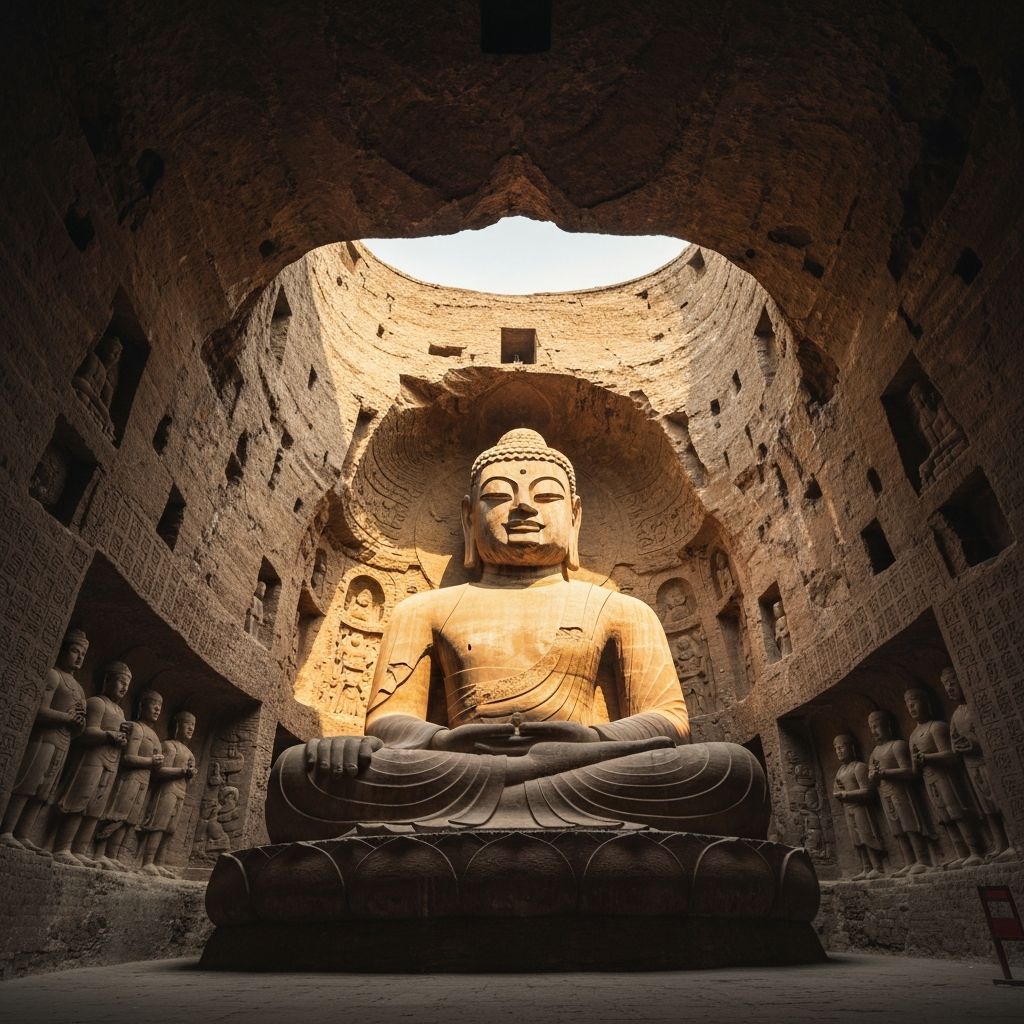
- The 17-metre seated Buddha of Cave 20
- The earliest royal-sponsored cave art in China
- A fusion of Indian, Central Asian and Chinese styles
Why the Yungang Grottoes matter
The Yungang Grottoes were carved between 460 and 525 AD during the Northern Wei dynasty, when Datong served as the dynasty’s capital. They are the earliest large-scale cave-temple complex in China and mark the moment Buddhist art began to take on distinctly Chinese forms.
The 51,000 statues across 252 caves show a remarkable progression: the earliest caves (16–20) feature colossal, muscular figures with Central Asian features, while later caves soften into elegant, Chinese-styled carvings. Walking from one end to the other is effectively walking through a century of artistic evolution.
The caves you should not miss
Cave 20 — the open-air cave whose 17-metre seated Buddha lost its front wall to erosion but became an icon. This is the single most photographed image of Datong.
Cave 5 — the largest Buddha in the complex (17 metres), seated inside a wooden temple front added in the Qing dynasty.
Cave 6 — entirely covered inside with a carved narrative of the Buddha’s life; the density of carving here is extraordinary.
Cave 12 — the “Music Cave”, famous for its carved orchestra of musicians and dancers.
How much time to allow
Most visitors need 3 to 4 hours to cover the site properly. The complex is a single linear route roughly a kilometre long; the western caves are quieter and often overlooked, but worth the extra walk.
Go early in the morning. The main caves face east and the low sunlight hits the statues well, and the tour buses arrive mid-morning.
Practical information
- Tickets
- ¥120 peak season / ¥100 off-season (official price, 2026). Book online in advance.
- Time needed
- 3–4 hours
- Best time
- Early morning, April–October
- Location
- About 16 km west of Datong city centre
- Getting there
- Bus 603, the tourist line from Datong Railway Station (roughly 07:00-18:00, every 20 minutes; check the schedule on the day), taxi (≈¥40), or the sightseeing bus from the city centre. City buses mostly stop running around 19:00, so check the last departure on a map app before you head back.
Prices and opening hours change seasonally. Verify current details before you travel.
Plan the booking
Book your Datong trip
Hanging Temple climbing tickets are capped at 2,475 a day and reservations open only seven days ahead. Check the official channel and current rules before booking; partner tour links do not replace the temple ticket.
Day tours & tickets
Guided day trips that pair the Hanging Temple with Mount Heng — the day that is hardest to do without a car.
Hotels in Datong
Live rates for the old city and the area around the grottoes. Peak-season rooms go first.
Travel insurance
Cover for medical costs, cancellations and delays. Cheap next to the price of an evacuation.
Affiliate disclosure: bookings made through these links may earn us a commission. You pay the same price.
Travel tips
- Photography is allowed outdoors, but no flash or tripods inside the caves.
- The site is exposed — bring sun protection in summer and warm layers in winter.
- Book online at least a day ahead in peak season (May–October and public holidays).
- In 2025 a visitor reported the on-site ticket desk accepts WeChat Pay only: Alipay and cash were both turned down. Load WeChat Pay before you go.
- Combine with the Datong Museum on the way back to the city — they are on the same side of town.